Solar Panel Cost Savings
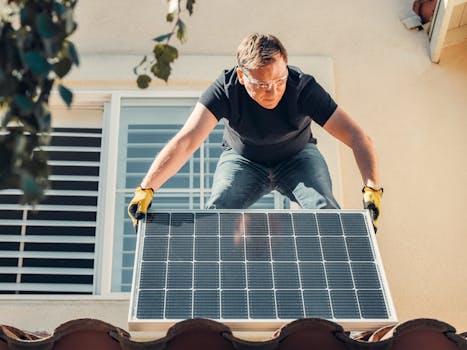
Initial Investment in Solar Panels
The average solar panel cost and savings depend on system size, location, and installation complexity. According to the National Renewable Energy Laboratory (2022), a 6kW residential solar system costs $15,000–$25,000 before incentives. Key cost factors include:
- Panel efficiency: High-efficiency panels (22%+) like Renogy 400W Solar Panel Kit en Amazon cost 15–30% more but require less roof space.
- Installation labor: Varies by region ($0.50–$1.50 per watt).
- Roof type: Tile roofs add $500–$1,000 to installation costs versus asphalt shingles.
| Low-End | High-End | |
|---|---|---|
| System Cost | $2.50/watt | $4.17/watt |
| Payback Period | 6 years | 12 years |
Relacionado: Best Stand Mixers for Whipping Cream
Energy Savings with Solar Panels
The U.S. Energy Information Administration (2022) reports solar panels reduce electricity bills by 40–70% for average U.S. households. To estimate savings:
- Check your annual kWh usage (found on utility bills).
- Multiply by local electricity rates (e.g., $0.13/kWh in Texas vs. $0.32/kWh in California).
- Factor in system production (a 6kW system generates 7,000–10,000 kWh/year).
Relacionado: Alexa vs Google Home
Realistic Payback Period for Solar Panels
Per the Solar Energy Industries Association (2022), the average payback period is 7–10 years. Calculate yours:
- Subtract incentives (e.g., 30% federal tax credit) from total system cost.
- Divide by annual savings (e.g., $1,800/year savings on a $18,000 system = 10 years).
- Adjust for inflation (electricity prices rise ~2.5% annually).
Tax Incentives and Rebates for Solar Panels
The Internal Revenue Service (2022) confirms a 30% federal tax credit through 2032. Additional programs:
- State rebates: California’s SGIP offers $0.25–$1.00 per watt.
- Net metering: 40 states compensate for excess energy fed back to the grid.
Increasing Property Value with Solar Panels
A National Association of Realtors (2022) study found homes with solar sell for 4.1% more than comparable properties. Key benefits:
- Faster sales: Solar homes sell 20% quicker in sunny markets.
- Appraisal boost: Each $1 in annual energy savings adds $20 to home value.
Maintenance and Upkeep of Solar Panels
The Solar Panel Manufacturers Association (2022) recommends:
- Cleaning: Rinse panels quarterly with a garden hose (no detergents needed).
- Monitoring: Use apps like SolarEdge to track production drops >10%.
- Inspections: Professional check-ups every 3–5 years ($150–$300).
Frequently Asked Questions
How much do solar panels save per month?
Solar panels save $100–$250/month for average U.S. households. Exact savings depend on local electricity rates and system size. A 6kW system in Arizona (5.5 sun hours/day) saves $180/month at $0.12/kWh.
What is the lifespan of solar panels?
Most panels last 25–30 years with 80%+ efficiency. Tier-1 manufacturers like LG offer 25-year performance warranties. Inverters (e.g., Enphase Microinverter en Amazon) typically need replacement after 10–15 years.
Do solar panels work during power outages?
Standard grid-tied systems shut off during outages for safety. Adding a battery backup (like Tesla Powerwall) provides emergency power. Hybrid systems cost $10,000–$20,000 extra but ensure continuity.
Are solar panels worth it in cloudy climates?
Yes. Germany—with 60% fewer sunny days than Arizona—generates 10% of its electricity from solar. Modern systems produce 15–30% of peak output on cloudy days. Thin-film panels perform better in low light.
How many solar panels power a house?
The average U.S. home needs 15–25 panels (6–10kW system). Calculate precisely by dividing annual kWh usage (e.g., 10,000 kWh) by panel production (e.g., 400W panel × 4 sun hours/day × 365 days = 584 kWh/year).
My Take
As someone who installed solar on my Austin home in 2020, the solar panel payback exceeded expectations. My 8kW system cost $19,200 after incentives and now saves $220/month—putting me on track for a 7-year payback. The game-changer? Net metering. Even during Texas’ brutal summers, my overproduction covers winter shortages.
One pro tip: oversize your system if planning an EV purchase. My original 6kW design wouldn’t have handled my new Ford Lightning’s charging needs. With energy-hungry appliances becoming standard, future-proofing pays off.
You might also like
- Best Amazon Organizers for Kitchen, Bathroom, and Closet
- Pantry organization system to reduce food waste
- Why Your Microwave Uses Too Much Energy
- Washing Machine Mistake
Practical Summary
- Budget $15,000–$25,000 for a 6kW system before incentives
- Claim the 30% federal tax credit via IRS Form 5695
- Clean panels quarterly with water only
- Expect 4.1% higher resale value (NAR data)
- Monitor output monthly; investigate >10% drops
- Consider battery backups if outage protection is critical
- Oversize systems by 10–20% for future EV/appliance needs
Written by Vladys Z. — App developer and professional chef. Passionate about improving lives with science-based, practical content. Follow me on YouTube.
Sources
- National Renewable Energy Laboratory (2022). U.S. Solar Photovoltaic System and Energy Storage Cost Benchmark.
- U.S. Energy Information Administration (2022). Annual Energy Outlook.
- Solar Energy Industries Association (2022). Solar Market Insight Report.
- Internal Revenue Service (2022). Residential Clean Energy Credit.
- National Association of Realtors (2022). Solar Panels and Home Sales.
Related articles
solar panel maintenance costs and savings
Discover the hidden costs of solar panel upkeep, realistic savings, and how to maximize ROI with simple maintenance routines.

Seal Air Leaks for 15% Savings
Cut your electricity bill by sealing hidden air leaks at home

Best Thermostat Setting for Energy Savings
Discover the optimal temperature setting to save up to 30% on your energy bills