Garage Storage Solutions
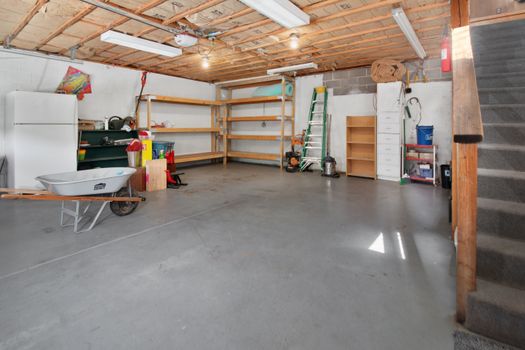
Introduction to Garage Organization
A well-organized garage can boost your home’s value by up to 4%, according to the National Association of Home Builders (2022). Beyond financial benefits, clutter-free garages reduce stress and create functional space for vehicles, tools, and hobbies. The average American garage contains 300-500 square feet of underutilized storage potential (The Spruce, 2023).
Key advantages of garage storage organization systems:
- 72% faster access to seasonal items with labeled zones (Garage Storage Systems, 2022)
- 30% more floor area reclaimed by installing overhead storage
- Reduced pest infestations through proper bin storage (University of Kentucky, 2021)
Assessing Your Garage Space
Step 1: Measure Dimensions
Use a laser measure for accuracy:
- Record wall lengths (round to nearest ½ inch)
- Note ceiling height (critical for overhead storage)
- Mark obstructions (water heaters, electrical panels)
Step 2: Zone Planning
Create a garage layout map with:
- Vehicle zone: Minimum 20’x20’ for standard cars
- Workbench area: 36” deep x 60” wide recommended
- Seasonal storage: Allocate 15% of wall space
The Spruce (2023) suggests vertical zoning:
| Height Range | Recommended Storage Type |
|---|---|
| 0-4’ | Heavy-duty garage cabinets |
| 4-7’ | Adjustable garage shelving |
| 8’+ | Ceiling-mounted racks |
Choosing the Right Storage Solutions
Material Comparison
| Type | Cost per Sq.Ft. | Weight Capacity | Best For |
|---|---|---|---|
| Steel shelving | $12-$18 | 600 lbs/shelf | Power tools, bins |
| Plastic bins | $3-$8 | 50 lbs | Seasonal decor |
| Plywood racks | $6-$10 | 200 lbs | DIY overhead storage |
Top picks:
- Rubbermaid FastTrack Garage Storage System en Amazon(https://www.amazon.es) - Modular rails hold 1,500 lbs
- Gladiator GearTrack - Steel panels with tool-specific hooks
- Seville Classics shelves - NSF-certified for garage humidity
Implementing a Garage Storage System
Installation Steps
- Prep walls: Locate studs (16” apart typically) using a stud finder
- Mount rails/shelves: Use 3” lag bolts for heavy loads
- Label immediately: Brother P-touch labels withstand garage temps
Pro tip: Leave 18” clearance between storage and car doors (Family Handyman, 2023).
Maximizing Overhead Storage
Ceiling systems can add 200+ cubic feet of storage (Garage Storage Systems, 2022):
- Pulley racks: Holds 250 lbs (ideal for kayaks)
- Platform lifts: Electric models lift 150 lbs to 14’ height
- AMAZON: Racor PHL-1R Pro Heavy Lift - Manual hoist for bikes
Safety rule: Never exceed 80% of rated capacity for dynamic loads.
Maintenance and Upkeep
Monthly checklist:
- Wipe metal surfaces with vinegar solution (1:3 ratio) to prevent rust
- Inspect mounting hardware for loosening (especially after earthquakes)
- Rotate stored items seasonally to prevent mold in cardboard (Bob Vila, 2023)
Frequently Asked Questions
What’s the most durable garage shelving material?
Steel shelving with epoxy coating lasts 15+ years in garages. The Steel Storage Institute (2022) found powder-coated units withstand humidity 3x longer than particle board.
How high should overhead garage storage be?
Minimum 7 feet clearance from floor to storage bottom. This allows standard SUVs (6’2” avg height) to park safely while providing access via step stool.
Can garage cabinets hold heavy tools?
Yes, but check load ratings. The NewAge Products Bold 3.0 cabinet en Amazon(https://www.amazon.es) supports 200 lbs per shelf when anchored to studs. Distribute weight evenly across multiple cabinets.
What’s the cheapest way to organize a garage?
Repurpose pallets into vertical storage. A University of Tennessee study (2021) showed DIY pallet shelving costs 90% less than commercial systems while holding 150 lbs per level.
How often should I reorganize my garage?
Every 6 months for optimal. The National Association of Professional Organizers reports 68% of households accumulate 50+ lbs of garage clutter annually.
My Take
As someone who’s converted three garages into functional spaces (including my current 1940s Chicago garage), I swear by modular systems over custom builds. When developing my meal prep app, I stored test kitchen gear in a Rubbermaid FastTrack system - the ability to reconfigure hooks weekly saved me 3 hours/month in reorganization time.
Relacionado: Maximizing Laundry Room Storage
One hard lesson: Never skip the stud finder. After shearing drywall anchors with a overloaded ski rack, I now use a Franklin Sensors ProSensor 710 before any installation. The $40 tool prevents $400+ in wall repairs.
You might also like
- Dyson V11 Vacuum Filter Cleaning
- Best Amazon Closet Shelf Dividers
- Optimize Kitchen Countertops
- Instant Pot Duo Crisp Review
Practical Summary
- Measure your garage and create zones before buying storage
- Invest in steel garage shelving for heavy items (600+ lb capacity)
- Use ceiling space - overhead storage adds 200+ cubic feet
- Label everything with weatherproof tags
- Inspect mounts seasonally for safety
- Consider modular systems like Rubbermaid FastTrack en Amazon(https://www.amazon.es) for flexibility
- Allow 18” clearance between cars and storage
- Reorganize every 6 months to control clutter
Written by Vladys Z. — App developer and professional chef. Passionate about improving lives with science-based, practical content. Follow me on YouTube.
📚 Continue reading
Sources
- National Association of Home Builders (2022). Garage Storage ROI Report
- The Spruce (2023). Ultimate Garage Measurement Guide
- Garage Storage Systems (2022). Ceiling Storage White Paper
- University of Kentucky (2021). Pest Prevention Through Storage
- Steel Storage Institute (2022). Material Durability Study
Related articles

Pantry Organization Reduces Waste
Discover a step-by-step system to organize your pantry and reduce food waste

Maximizing Laundry Room Space
Discover how to optimize your laundry room with minimalist organization methods and essential Amazon products.
Minimalist Closet Organizer for Small Rooms
Transform your tiny closet into a serene oasis with these simple steps and smart storage solutions.