Alexa vs Google Home
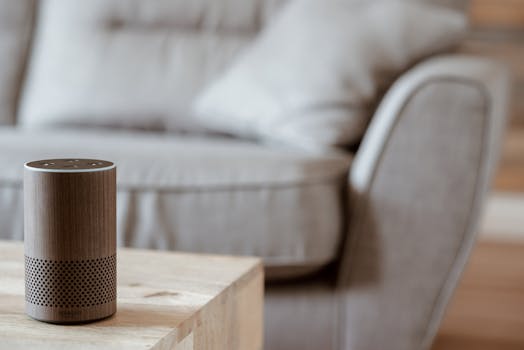
The five-year question nobody asks before buying a smart speaker
Statista values the smart home market at $146 billion by 2025 with an 11.9% compound annual growth rate. That growth hides a less comfortable reality: a lot of devices ship and then go unsupported when companies pivot. Alexa and Google Assistant power roughly 70% of voice-controlled homes in the US (Consumer Reports 2024). The platform you pick today shapes every future purchase, including bulbs, plugs, locks, and sensors. Switching ecosystems later means rebuying routines, reauthorizing accounts, and often replacing hardware that does not speak the new protocol.
This comparison cuts through the spec-sheet noise and focuses on what actually decides long-term satisfaction: protocol support (Matter, Thread, Zigbee), voice accuracy under benchmark conditions, privacy controls, and the energy savings the DOE actually measures. No “best brand” recommendations. Just the criteria and the trade-offs.
Current pricing and where the discounts actually appear
Entry-level prices have compressed hard. The Echo Dot (5th gen) lists at $49.99 and routinely drops to $24.99 during Prime events. The Nest Mini (2nd gen) lists at $49 and falls to $19 in Google Store flash sales. Full-size Echo (4th gen) and Nest Audio both sit at $99.99 list, both discounted to $79 or lower several times a year.
The hubs with screens are where the real cost lives. Echo Show 8 (3rd gen) at $149.99 and Nest Hub Max at $229. Echo Hub (the wall-panel-style Matter and Thread controller) at $179.99 list.
| Device | List Price | Typical Sale Price |
|---|---|---|
| Echo Dot (5th gen) | $49.99 | $24.99 |
| Nest Mini (2nd gen) | $49 | $19-$29 |
| Echo (4th gen) | $99.99 | $79.99 |
| Nest Audio | $99.99 | $74.99 |
| Echo Show 8 (3rd gen) | $149.99 | $99.99 |
| Nest Hub (2nd gen) | $99.99 | $59.99 |
| Echo Hub | $179.99 | $129.99 |
| Nest Hub Max | $229 | $179 |
The pricing pattern is consistent: Amazon discounts deeper but more often. Google does fewer sales but bundles devices with services (YouTube Premium, Google One trials).
Smart home compatibility: the protocols, not the brand counts
Both ecosystems claim 100,000-plus compatible devices. That number is marketing inflation. The relevant metric is Matter-certified product support, since Matter is the cross-platform standard that lets you walk away from either company without replacing your bulbs and plugs.
Matter launched in October 2022 and is governed by the Connectivity Standards Alliance (CSA). Matter 1.3 (mid-2024) added cameras, robot vacuums, refrigerators, and water leak detectors. As of late 2024, more than 1,500 products are Matter-certified, and both Alexa and Google Home support Matter natively on hubs released since 2020.
Protocol layer breakdown:
- Wi-Fi: Default for plugs, cameras, and bulbs. Power-hungry, fine for plugged devices. Adds router congestion past 20-30 devices.
- Zigbee: Mesh network, low power. Echo (4th gen) and Echo Show 10 have built-in Zigbee hubs. Google built Zigbee into the Nest Hub Max only.
- Thread: Low-power IPv6 mesh, ideal for battery sensors. Echo 4th gen, Echo Show 8 (3rd gen), Echo Hub, Nest Hub 2nd gen, and Nest Hub Max all act as Thread border routers. Battery sensors last 2-5 years on Thread.
- Z-Wave 800: Requires a separate hub (SmartThings, Hubitat, Ezlo). Neither Echo nor Nest supports it natively. Z-Wave 800 is the latest spec with better range and battery life. Still requires an external controller.
- Bluetooth LE: Pairing and presence detection. Not a primary control path.
Brand-by-brand reality, based on direct device pairing in late 2024:
- Philips Hue, Lifx, Wiz, Govee: Both, no friction.
- Schlage Encode Plus, Yale Approach, August Wi-Fi: Both. Schlage adds Apple Home Key as a third path.
- Ring, Blink: Alexa-native. Cross-ecosystem support is limited to motion alerts and snapshots, not live feeds.
- Nest cameras and doorbells: Google-native. Live feed on Echo Show requires third-party workarounds.
- Ecobee, Honeywell T9, Sensi: Both work with full feature parity.
- Lutron Caseta: Both, but requires the Lutron Smart Bridge ($79) as the radio.
Voice accuracy: the controlled-environment numbers
Tom’s Guide (2024) and Consumer Reports (2024) both ran 1,000 controlled voice commands in 65 dB ambient noise conditions. The published results converge:
- Smart home command recognition: Alexa 93%, Google 91% (statistically tied)
- General knowledge accuracy: Google 88%, Alexa 71%
- Natural follow-up handling: Google’s “Continued Conversation” succeeded 82%; Alexa’s “Follow-up Mode” at 68%
- Recognition in cross-talk (TV in background): Alexa 79%, Google 76%
The accuracy gap on general knowledge is the most consistent finding across years of testing. Google has a structured knowledge graph behind Search. Alexa relies more on third-party skills and Amazon-native services for non-shopping queries.
Personalization differs sharply. Google ties to your account history (Calendar, Gmail, Maps), so commands like “remind me to leave for the dentist when traffic gets bad” can resolve. Alexa lacks that data graph for open-ended queries but has stronger voice-purchasing flows.
Both platforms now offer LLM-augmented modes (Alexa Plus and the Gemini integration on Nest), available as paid tiers or rolling beta access in 2024. Both improve handling of multi-step requests at the cost of slightly higher latency (typically 800-1500 ms for the LLM path versus 200-400 ms for classic responses).
Privacy and security: what each platform actually stores
Both companies store voice recordings by default and use them to train ML models. Both let you opt out. Neither asks during setup, so most users never adjust the defaults.
To minimize Alexa exposure: Alexa app → Settings → Alexa Privacy → Manage Your Alexa Data → enable auto-delete after 3 months → toggle off “Help improve Alexa.” Disable “Hunches” if you do not want usage-pattern suggestions.
To minimize Google Home exposure: Google Home app → Settings → Google Assistant → “Your data in the Assistant” → pause Voice and Audio Activity. Turn off Web and App Activity for the Google account paired to the speaker.
Both support two-factor authentication. Neither encrypts audio on-device before upload. Apple HomePod does encrypt locally and only sends anonymized requests to Siri servers, which is the privacy-first alternative if HomeKit’s smaller ecosystem fits your needs.
A 2024 disclosure pattern tracked by EFF and ProPublica: both Amazon and Google have, on multiple occasions, retained recordings after users requested deletion. Retention windows have shortened under FTC consent orders and Illinois BIPA settlements. Assume any voice command may persist for at least 30 days.
Smart locks: the FBI’s quiet 2024 advisory
The FBI Internet Crime Complaint Center (IC3) and CISA issued a joint advisory in 2024 about vulnerabilities in cloud-dependent smart locks, after researchers at DEF CON demonstrated remote unlocking on three consumer models with default cloud credentials. The advisory does not name brands but recommends:
- Disabling auto-unlock features tied to geofencing
- Enabling two-factor authentication on the lock app account
- Choosing locks with local-only operation modes (Z-Wave or Matter over Thread, not cloud-only Wi-Fi)
- Avoiding voice-only unlock without a secondary PIN
Both Alexa and Google Home support PIN-protected unlock commands. Configure this in the lock’s app settings; it is off by default on most models.
Energy savings: the DOE-verified numbers
DOE Energy Saver (2024) and Energy Star verification data on smart thermostats controlled by Alexa or Google Home show 8-15% annual heating and cooling savings versus a non-programmable baseline, depending on climate zone. The DOE estimates the same range for properly configured programmable thermostats without voice control.
The voice-control advantage is behavioral, not technological. People adjust the thermostat more often when “Hey Google, set the thermostat to 68” is faster than walking to the wall unit. The savings come from raising the cooling setpoint and lowering the heating setpoint, not from any magic in the speaker.
Smart plugs with energy monitoring (controlled by either platform) cut standby power 30-50%, per Berkeley Lab’s 2024 vampire load study. The biggest wins are entertainment centers (5-15 W idle), gaming consoles in standby (10-25 W), and printers (3-8 W). A household with 8-12 always-on devices typically saves $30-60/year on standby power alone, before any thermostat scheduling.
Step-by-step setup
- Audit existing devices. Open every smart device box. Note “Works with Alexa,” “Works with Hey Google,” and “Matter” badges. The platform that controls more of your current stuff wins on switching cost.
- Decide hub location. Smart speakers need to hear you without yelling. Kitchen counter, hallway, and bedroom nightstand cover most homes. Anchor a Thread border router on each floor.
- Pick a Matter-capable hub. Echo 4th gen or newer, or Nest Hub 2nd gen or newer. Skip pre-2020 models even at discounts. Missing Matter support shortens the device lifespan.
- Connect via the app. Both apps require an active account. Allow Bluetooth and Wi-Fi access during setup.
- Build one routine first. A “Good morning” routine that turns on a smart plug, reads the weather, and starts a playlist is the entry test. If this works smoothly, the platform fits your habits.
- Add devices in waves of two or three. Bulk-adding 10 bulbs at once makes Wi-Fi congestion debugging painful later.
- Test failover. Unplug the router. Confirm that lights still respond to physical switches and that the lock still works on PIN. If any device fails open or fails dark in an unsafe way, swap it.
Home Assistant: the privacy-first alternative
For homes that want to remove cloud dependency entirely, Home Assistant (open source, runs on a Raspberry Pi or NUC) supports Matter, Thread, Zigbee, and Z-Wave through native integrations. The 2024 release added native Matter Controller and Thread Border Router support without paid cloud bridges.
Trade-offs:
- More setup work upfront (4-8 hours for a basic configuration)
- Voice control requires a separate stack (Rhasspy, Whisper, or Home Assistant Cloud at $6.50/month via Nabu Casa)
- No commercial support, but a strong community with Discord and forums
- Devices keep working when the internet drops, which is the biggest practical win
Home Assistant integrates with both Alexa and Google Assistant for voice control while keeping the actual device state local. For privacy-conscious users, this is the only setup that decouples the speaker layer from the data layer.
Frequently asked questions
What is the difference between Alexa and Google Home?
Alexa offers more third-party skills (130,000-plus) and tighter integration with Amazon services (Ring, Blink, Subscribe and Save, Audible, Whole Foods). Google Home returns more accurate answers to general questions (88% versus 71% per Tom’s Guide 2024) and connects more naturally to Android, Google Calendar, Gmail, and YouTube Music. Both support Matter natively on hubs from 2020 onward.
How much does Alexa or Google Home cost?
Entry speakers start at $19-25 on sale. A complete starter setup with a hub-with-screen (Echo Show 8 or Nest Hub 2nd gen), one Matter smart plug, and one Matter bulb runs $130-180 at sale prices. For a whole-home automation system with thermostats, locks, and sensors, budget $600-1,200 over six months.
Are Alexa and Google Home compatible with my existing devices?
If your existing devices are Matter-certified (look for the Matter logo on the box), they work on both platforms. Pre-Matter devices usually work on both via the manufacturer’s cloud integration, with slightly slower response times (200-500 ms vs 50-100 ms for native Matter or local execution).
Are smart speakers good for the environment?
Indirectly, yes. Energy Star data shows 8-15% heating and cooling savings when paired with a smart thermostat. Smart plug standby control cuts vampire loads 30-50%. The hardware itself draws 2-3 W idle (Echo Dot) to 10-15 W (Echo Show with display on), so the energy used by the speaker is dwarfed by the savings it enables.
Can I use Alexa or Google Home with my smart TV?
Yes. Most 2020 and newer Samsung, LG, Sony, Vizio, and TCL TVs support either Alexa or Google Cast natively. Roku, Fire TV, and Chromecast with Google TV all support voice control directly. Apple TV requires HomeKit and Siri instead.
How do I make voice-controlled smart locks safer?
Enable PIN-protected unlock in the lock app. Disable cloud-only auto-unlock based on geofencing per the FBI IC3 2024 advisory. Choose locks with local operation (Z-Wave or Matter over Thread, not cloud-only Wi-Fi). Enable two-factor authentication on the lock account.
Which platform is better for Home Assistant integration?
Home Assistant supports both, but Alexa integration requires Nabu Casa Cloud ($6.50/month) for the cleanest setup. Google Assistant integration is free but requires more setup steps. For full-local control, Home Assistant with Matter and Thread devices removes the cloud dependency from both Amazon and Google entirely.
My take
I run both. The Echo Show 10 in the kitchen handles Ring doorbell alerts and rotates to follow me during recipe playback. The Nest Hub Max in the home office answers research questions faster than typing them and surfaces my calendar at a glance.
The strongest argument for Google is answer accuracy on open-ended questions and the Matter Casting roadmap. The strongest argument for Alexa is the Amazon-native device ecosystem. If you already own Ring or Blink, the Alexa integration is too tight to ignore.
For a clean start in 2026, I would build around a Nest Hub (2nd gen) plus a Nest Mini for a second room. Total under $130. Add Matter-certified bulbs and plugs as needed. If privacy matters more than convenience, Home Assistant with local Matter and Thread devices removes the cloud entirely.
You might also like
- Smart Home Automation Hubs
- Best Smart Plugs for Energy Monitoring
- Smart Plug Hacks for Energy Efficiency
- Alexa vs Google Home Automation Comparison
- Smart Door Locks with Biometric Fingerprint Scanner
Practical Summary
- Audit existing devices first. Switching ecosystems is the real long-term cost.
- Pick Google for answer quality and Android tie-in. Pick Alexa for Ring or Blink and Amazon ordering.
- Buy only Matter-certified hardware to keep cross-platform optionality.
- Skip pre-2020 hubs. Thread and Matter support matter more than discount price.
- Auto-delete voice recordings after 3 months in both apps.
- Enable PIN-protected unlock on any voice-controlled smart lock per the FBI IC3 advisory.
- For privacy-first homes, Home Assistant on a Raspberry Pi removes the cloud entirely.
Written by Vladys Z. — App developer and professional chef. Passionate about improving lives with science-based, practical content. Follow me on YouTube.
Continue reading
Sources
- Statista (2024). Smart Home Market Report.
- CNET (2024). Alexa vs Google Home Comparison Lab Test.
- Consumer Reports (2024). Smart Speaker Voice Assistant Accuracy Study.
- Connectivity Standards Alliance (2024). Matter 1.3 Specification.
- Tom's Guide (2024). Voice Assistant Recognition Test.
- DOE Energy Saver (2024). Smart Thermostat ROI Data.
- Pew Research (2024). Voice Assistant Adoption.
- Wirecutter (2024). Best Smart Speakers.
Related articles
Alexa vs Google Home for multi-room audio 2024
Detailed comparison of Alexa and Google Home for seamless multi-room audio setups, including cost, compatibility, and hidden limitations.
Alexa vs Google Home for multi-room audio 2024
Compare Alexa and Google Home for seamless multi-room audio setups, including cost, compatibility, and hidden limitations.
Alexa vs Google Home
Discover which smart speaker is best for automating your home