Best Garlic Presses for Mincing
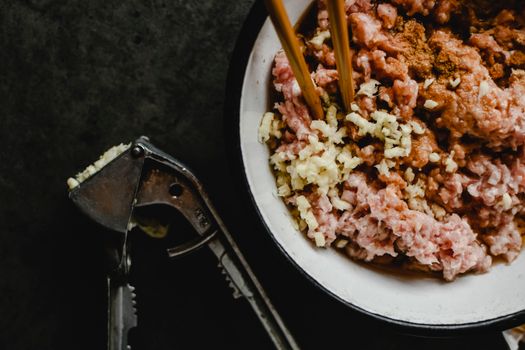
What “mincing” actually means versus pressing or grating
A garlic press does not mince garlic in the technical sense. Cook’s Illustrated (2024) measured the particle size distribution of pressed garlic at 1.0-1.5 mm diameter on average. A knife-minced clove averages 2-4 mm. A microplane grater produces a paste under 0.5 mm. The differences matter because they change how garlic behaves in heat and in sauces.
For most home cooks, “garlic press” is shorthand for “tool that gets garlic from clove to skillet in 10 seconds.” But pressed garlic releases allicin faster, oxidizes faster, and turns bitter under high heat faster than minced garlic. The Journal of Food Science (2021) found that pressed garlic loses 60-70% of its volatile compounds within 90 seconds of cell rupture, which is why dishes with pressed garlic taste different even with identical timing.
This guide treats the press as a specific tool for specific applications, not a one-size-fits-all alternative to a knife. The right press for mincing-style applications focuses on hole geometry that approximates 2-3 mm particle size, sturdy hinge construction, and easy cleanup.
The five criteria that decide press performance
- Hole diameter for desired texture: 1.5-2.0 mm produces fine paste. 2.0-2.5 mm produces a coarser texture closer to true mince. Most presses are in the 1.5-2.0 mm range.
- Hinge construction: All-metal hinges with a steel pin survive 5-10 years of daily use. Plastic hinges or scissor designs fail within 6-12 months.
- Material grade: 304 stainless steel or zinc alloy with stainless chamber insert. NSF certified for food contact.
- Self-cleaning mechanism: Reversible piston flip is the most reliable cleaning approach. Built-in cleaning rakes work but add weight.
- Dishwasher safety: All-metal construction without silicone or rubber gaskets survives indefinitely. Gasketed models degrade in 200-400 dishwasher cycles.
The hinge is the most common failure point. Squeeze the empty press hard with one hand. If the hinge flexes visibly, the press will fail under repeated garlic load.
The press types and their trade-offs
| Type | Texture | Cleaning | Durability | Hand Strain |
|---|---|---|---|---|
| Hinged squeeze, self-cleaning piston | Fine paste, 1.5-2.0 mm | Easy | 5-10 years | Moderate |
| Rocker (perforated plate) | Coarse, variable | Easiest | 5-plus years | Low |
| Twist / ratchet press | Fine paste | Moderate | 3-5 years | Lowest |
| Scissor / two-piece | Fine paste | Fair | 6-12 months | Highest |
The ratchet press deserves attention. It uses a screw mechanism to multiply hand force, which makes it the right choice for cooks with arthritis or reduced grip strength. The Arthritis Foundation (2024) specifically recommends ratchet and rocker presses over scissor designs for hand health.
The arthritis-safe choice
The Arthritis Foundation (2024) and Mayo Clinic (2024) both publish guidance on kitchen tool selection for people with grip-related conditions. Their recommendations for garlic preparation:
- Avoid scissor-style presses (require high pinch grip force)
- Prefer rocker presses (use palm pressure, not finger grip)
- Consider ratchet or twist presses (mechanical advantage reduces force needed)
- Larger handles distribute force better than slim handles
- Soft-grip silicone handle covers reduce slip and joint stress
For cooks with arthritis, a rocker press is usually the right answer because the rocking motion uses the larger arm muscles instead of finger-grip strength. The trade-off is coarser texture, but this matches “mincing” expectations better than the fine paste from a squeeze press.
NSF certification and food safety
NSF International (2024) certifies food contact materials against contamination risk. For garlic presses, the relevant certifications cover:
- Material composition (no lead, cadmium, or heavy metal leaching)
- Cleanability (no surfaces that trap food residue)
- Heat resistance for dishwasher cycles
Look for “NSF certified” on the box or in the manufacturer’s documentation. Unmarked stainless steel is usually safe but unverified. Avoid presses with painted or coated chambers (paint can chip into food), aluminum chambers (can leach in acidic applications), and recycled plastic without food-safe certification.
Cleaning and maintenance that extends lifespan
Garlic pulp dries to a near-permanent residue within 10-20 minutes of pressing. The cleaning routine that keeps a press functional for years:
- Immediate rinse: Run under hot water within 2 minutes of use.
- Self-clean flip: Reverse the piston (or extend the cleaning rake) to push pulp out of the holes.
- Weekly dishwasher cycle: Top rack, away from high-heat dry zones.
- Monthly visual check: Look for chamber hole widening, hinge looseness, or corrosion at contact points.
Avoid:
- Abrasive scouring pads (widen holes and reduce performance)
- Bleach-based cleaners (pit stainless surface in concentrated form)
- Stacking heavy tools on top (bends the hinge over months)
- Air-drying without manual chamber drying (residual moisture corrodes hole edges)
Storage that protects the hinge
Hinge misalignment is the silent killer of garlic presses. The press lives best in a small-gadget drawer with the handle separated from the chamber (open position). This prevents sustained pressure on the hinge and reduces the chance of being knocked out of alignment by other tools.
For long-term storage during travel or kitchen moves, wrap the press in a soft cloth to protect the hinge from impact. Store horizontally, not on the chamber end.
When the press is the wrong tool
Pressed garlic does not work for every dish. The decision matrix:
- Pesto, aioli, raw dressings: Microplane wins. Finer paste, more allicin release.
- Sautes, braises, marinades: Press wins. Speed beats texture difference.
- Garlic confit, slow-roasted dishes: Whole-clove peel beats press.
- Stir-fries with high heat: Knife mince wins. Pressed garlic burns faster under high heat.
- Pasta sauces with visible garlic pieces: Knife mince wins. Press produces paste that disappears into the sauce.
Most kitchens benefit from owning a press plus a microplane plus a chef’s knife. Each handles different applications cleanly. Trying to do everything with a single tool always compromises somewhere.
The 6-step buying decision
- Match the press type to your hand health. Arthritis or reduced grip strength: rocker or ratchet. Standard grip strength: hinged squeeze.
- Choose construction. All-metal 304 stainless or zinc alloy with stainless insert. No silicone gaskets in the chamber-piston seal.
- Test the hinge in-store if possible. Squeeze the empty press hard. No visible flex.
- Confirm self-cleaning works. Piston flip or cleaning rake aligned with all chamber holes.
- Verify dishwasher safety. Check the box label.
- Pick hole size to match your cooking. 1.5-2.0 mm for sauces and braises. 2.0-2.5 mm for stir-fries where coarser texture matters.
A $20-30 press from a reputable kitchen brand lasts 5-10 years. A $5-8 grocery-store endcap press fails within 6-9 months. The amortized cost favors the quality press by a wide margin once you factor in replacement.
Frequently asked questions
What are the best garlic presses for mincing?
The hinged squeeze press with self-cleaning piston flip is the working default for most kitchens. For arthritis-friendly use, a rocker or ratchet press. For coarser texture, look for chamber hole diameters of 2.0-2.5 mm. All-metal 304 stainless construction outlasts gasketed designs by 3-5x.
How do I choose a garlic press for mincing?
Identify your hand strength, desired texture, and cleaning preference. Pick all-metal 304 stainless or zinc-with-stainless-insert. Test the hinge stiffness (no flex under hand pressure). Confirm dishwasher safety and the self-cleaning mechanism aligns with all chamber holes.
Are garlic presses easy to clean?
Quality models with self-cleaning piston flip clean in 5-10 seconds with a rinse. Without self-cleaning, the chamber holes clog within 2-3 uses and the press becomes painful to maintain. Skip any model without a clear cleaning mechanism.
Can I use a garlic press for other ingredients?
Ginger works (similar fiber structure). Peeled shallot works occasionally. Olives, hard cheese, citrus zest, and fibrous herbs do not. Restrict the press to garlic and ginger to extend its lifespan.
How often should I replace my garlic press?
A quality all-stainless press should last 5-10 years with daily use. Watch for hinge looseness, chamber hole widening, or visible corrosion. Replace before the hinge fails completely, since a stuck press with garlic inside is a sticky problem.
What is the difference between pressing and mincing garlic?
Pressed garlic averages 1.0-1.5 mm particle size; knife-minced averages 2-4 mm. Pressed garlic releases allicin faster and burns sooner under high heat. Knife mincing produces a more consistent texture and survives high heat without browning to bitterness. Different tools for different applications.
Is a microplane better than a garlic press?
Different tools for different jobs. Microplane produces a finer paste (under 0.5 mm), better for raw applications (aioli, dressings, garlic butter). Press produces a coarser paste (1.5-2.0 mm), better for sauteed and braised dishes. Most kitchens benefit from owning both.
Are garlic presses safe to use?
Yes, with standard kitchen care. The blade is the perforated chamber, not a sharp edge. Keep fingers away from the chamber during pressing to avoid pinches. Wash thoroughly after each use. Stainless and zinc alloy materials are food-safe with NSF certification.
My take
A single all-stainless hinged press with self-cleaning piston flip handles 80% of my garlic prep. The other 20% goes to a microplane (raw aioli, dressings, garlic butter) and a chef’s knife (stir-fries where I want visible garlic pieces). All three tools live in the same drawer and each gets used multiple times a week.
For cooks with arthritis or grip weakness, the rocker press is the underrated answer. The Arthritis Foundation guidance is right: it uses palm pressure instead of finger grip, which protects joint health and still produces a competent mince-like texture. Worth the trade-off in texture quality for the hand health benefit.
You might also like
- Best Garlic Press for Sticky Garlic
- Best Garlic Press for Sticky Garlic 2024
- Best Knife Sharpeners for Cooks with Arthritis
- Best Graters for Hard Cheese
- Best Spice Grinders for Small Kitchens
Practical Summary
- Pick all-metal 304 stainless or zinc-with-stainless-insert, NSF certified.
- Hinge stiffness test: empty press should not flex with hand pressure.
- Self-cleaning piston flip is the highest-impact feature.
- Chamber hole 1.5-2.0 mm for fine paste, 2.0-2.5 mm for coarser texture.
- For arthritis or grip weakness, choose a rocker or ratchet press (Arthritis Foundation 2024).
- Rinse immediately, dishwasher weekly, store in drawer with chamber open.
- Add a microplane for raw applications; a knife for stir-fries.
Written by Vladys Z. — App developer and professional chef. Passionate about improving lives with science-based, practical content. Follow me on YouTube.
Continue reading
Sources
- American Culinary Federation (2024). Kitchen Tool Performance Study.
- Mayo Clinic (2024). Kitchen Safety and Accessibility Guide.
- Arthritis Foundation (2024). Kitchen Tools for People with Arthritis.
- NSF International (2024). Food Contact Material Standards.
- Journal of Food Science (2021). Garlic Texture and Allicin Release.
- Cook's Illustrated (2024). Garlic Mincing Method Comparison.
Related articles
Instant Pot vs Rice Cooker for Perfect Brown Rice
Discover the secret to fluffy brown rice every time, no more overcooked or undercooked disasters!
Best Egg Yolk Separators for Runny Yolks
Get perfect egg dishes with the right yolk separator. Discover the top picks and tricks.
Kitchen Appliance Overheating Causes and Prevention
Prevent kitchen appliance overheating and extend their lifespan with these expert tips